

What if books could control your mind? Could you resist?

I thought I’d give you a question to puzzle over, in this blog… if books could control your mind, could you resist?

A recap… what forms the worlds of the Word Guardians

In What are the Worlds of the Word Guardians I talked about word magic and how it forms the worlds, or realms, that the characters visit.

When reading, a scene forms in the mind’s eye of readers and the story plays out. This is not just imagination; it takes shape in a magical realm. It’s like a stage, where props and actors are formed from the magic and play out the scene. Many readers can unconsciously collaborate, witnessing and shaping the scene in the mind’s eye, and the realm responds, changing what’s presented to match the collective imagination of the readers.

How the Controllers control

In Introducing the Controllers, the Word Guardians ‘bad guys’, I described how this process of imagination can be influenced. Controllers can visit and change the scene in the realm using word magic. This can then be ‘seen’ by readers and influence their imagination. It can be mundane, or more impactful and that’s where the battle between the Controllers and the Guardians starts to play out. It’s a battle for control versus free will.

On a visit to Victorian London, Yas learns that most readers ignore things that don’t make sense. But subtlety is the key here. The Controllers make changes that readers accept as a seed and then that can be expanded upon to greater effect. It influences the thoughts of readers, placing suggestions of fake news, or as we see with Book 3 The Shadow Readers, readers can be incited to action to further the Controllers’ goals.

So if this happened to you, how would you know?

If someone was subtly influencing your thoughts, would you recognize the signs?  With so much influence in general in the world already, what ways can we safeguard our minds?

Like the Shadow Readers in book 3, if we’re being controlled and taking uncharacteristic actions, or performing unhealthy habits we hope that family and friends would challenge us. That would be one call back to reality.

If it’s more subtle though, as we’re influenced by stories, it could change our beliefs over time. Perhaps we might express those views, but other than that, there may be no external signs.

What about if a Controller influences us to say or do something that conflicts with our own values (see Waking up to core values in a time of crisis)? Would we become caught up in it or would it jar internally and cause us to pause for a moment?

Could you resist?

Ultimately, we must question what we read, see and hear and I’ve touched on this from the Guardians perspective in How do the Word Guardians determine the truth. We should ask who has presented a story and why now? What might benefit whom from the way in which it has been portrayed? Only then can we start to know our own thoughts and form our own beliefs, versus trusting what comes to us.

So, what do you think? If a book started to control your mind, would you notice? Could you resist? I’d be interested to hear what you think.

And, to learn more about how mind control happens in the series, you’ll have to read the series. Click the button below to view the books in your usual Amazon store (all the books in the series are available in paperback and kindle editions).

Follow us on social media for the latest news and updates…

The beauty of innocence, introducing Eddie

Before finishing up on the theme of Who are your favourite characters in books?, I wanted to talk about the beauty of innocence. And I thought I’d do this by way of introduction to Eddie, someone I’ve not talked about before in my blogs.

The beauty of innocence

An innocent in a story is someone who is pure, honest, kind and possibly naïve in the world. They have simple beliefs at heart, are likely optimistic and have a literal understanding of right and wrong. Think of Dorothy in the Wonderful Wizard of Oz and Forrest Gump. Both of these characters have an innocence at heart that helps steer them through their respective stories, make friends, have significant life changes thrust upon them and enables them to achieve their goals (in Dorothy’s case to return home, for Forrest Gump to live a simple and authentic life).

Introducing Eddie

Eddie, in the Word Guardians series, is very much an innocent. When we meet him, he’s in magical disguise as Wesley, having had this thrust upon him because of the misguided actions of his father, Detective Wheeler. Eddie’s under some form of control by Penn and, later, Orfeo, and the relationship seems to be very much that of villains controlling an innocent. I’ll leave it to you to decide though, after you’ve read Book 1. All I’ll say is that it’s not quite as it seems (see previous blog Who is the mysterious Penn for more insight).

Later in the story, Eddie becomes free of the magic and helps Yas, becoming friends. In Book 2, that friendship becomes a source of jealousy for Sam, who thinks that Yas is more interested in Eddie than him. The innocence that Eddie portrays doesn’t enable him to recognise or understand that dynamic, so he becomes wary of Sam for a time. At the end of Book 2, we see that Eddie has found an unorthodox friend in Akoni, Yas’s stepbrother who helped the Controllers at the expense of his adopted grandfather and himself. The relationship continues into Book 3 (again, I can’t say more without plot spoiling), but the two of them help each other. Akoni’s darkness and previous problems become lighter with Eddie around, and Akoni helps Eddie see the naivety in some of his world view.

So, is Eddie an innocent?

Yes, Eddie is a gentle character who certainly starts out with the beauty of innocence. He’s caught up in life circumstances that he didn’t ask for and his innocence helps him remain true to his authenticity, no matter the situation. He also learns a lot about himself and others along the way, arguably moving him away from the classic definition of that role.

So, who is he? Ultimately, I’ll leave it up to you to decide. To find out more, read the story of Eddie woven through the first three books of the series. Click the button below to view the books in your usual Amazon store (all the books in the series are available in paperback and kindle editions).

Follow us on social media for the latest news and updates…
What makes a villain a villain? Who is Orfeo?

Continuing the theme of Who are your favourite characters in books? and What makes a hero?, it’s time to look at what makes a villain a villain.

What is it that sets a villain apart from an antagonist?

Who are the villains in the Word Guardians series?

Well, the villains of the series are the Controllers. They want to influence the minds of readers so that they can achieve their goal, control. To avoid plot spoilers, you’ll have to read the books to identify and understand all the villains in the series. There are some characters that act as antagonists but aren’t, and vice versa. And they seem to be this way because they are either protecting themselves while they figure out who they can trust or just acting out an agenda and haven’t yet revealed their cards. I can however share the name of one of the major villains of the series though, and that’s Orfeo, the vampire with a grand plan.

Who is Orfeo?

When you first meet Orfeo, he’s busy manipulating Detective Wheeler (who I’ve talked about in Waking up to core values in a time of crisis. Wheeler tells him what is going on within the police force, so that Orfeo can gain control of the Police Commissioner, as we see in Book 2.

Why does he want to do this? Like all good villains he wants control the story, in this case both inside and out of the magical realms. He uses a form of telepathic control, and uses some readers to incite all sorts of outcomes, none of which are pleasant.  Orfeo claims all the trouble is from a small faction of insurgents called the Word Guardians. And he does this to justify a crackdown from the police.  Ultimately, he wants the Word Guardians captured.

Villain or just antagonist?

So, knowing a little more about him, is Orfeo a villain or just an antagonist? To answer the question, we need to look at definitions of each.

A dictionary definition of an antagonist is that of someone opposing another. This doesn’t necessarily have to be evil or criminal in nature, but typically is someone opposing a protagonist within a story.

In contrast, the dictionary definition of a villain is that of someone blamed for evil or difficulty. It’s antagonistic in nature, but it indicates a deeper level. It’s likely criminal, wants to see the downfall or deposing of protagonists and is often dishonest and immoral in nature.

Based on these, Orfeo doesn’t sound like just an antagonist, does he? He’s wanting to expose the Word Guardians and while doing that he’s seeding and growing hatred of their cause, for his gain. It’s immoral and points to a wider evil, that of control of people’s imaginations so that they can do his bidding.

But who prevails?

Be honest, you want to know who wins, right? The Word Guardians or Orfeo?

And of course, I can’t tell you here. You’re going to have to read books 1 and 2 to find out. What I can tell you though is that you’ll also learn a little more about his background, his relationship with his number one, Raelinn, (who I’ve also talked about in The good and bad sides of loyalty), and some of his motivations for his dastardly deeds.

So, click the button below to view the books in your usual Amazon store (all the books in the series are available in paperback and kindle editions).

Follow us on social media for the latest news and updates…
The good and bad sides of loyalty

In the previous blogs What trust is and why it is important and Waking up to core values, I’ve delved into the relationship that plays out between Detective Wheeler and the vampire, Raelinn. Loyalty, and the good and bad sides of loyalty are related, and something I thought I’d talk about here.

Loyalty can follow from trust and respect in someone’s core values, but it can also mean that we end up saying and doing things that take us away from our own values.

So, to give a little more context, here’s a snippet from Book 2 The Twisting Tales (no plot spoilers, but if you re-read the excerpt in the Trust blog post, you’ll see that Raelinn and Wheeler are at least talking here).

The good and bad sides of loyalty

“How’s the diet of blood, blood and more blood working out” asked Wheeler.

“Are you deliberately trying to rile me, Detective?” Raelinn shot back.

“No,” replied Wheeler. “I’m trying to keep the storylines at bay. They are all around us here. We have to be close to something.”

“Close to what?”

“I’m not sure. Just trust me,” he said. “We’re better off here, in tree cover. If you look through the canopy, there’s stories swirling all the way up. Do you see them?”

“No!” she replied. “Only you can see them.”

Wheeler stopped for a moment, remembering something.

“Earlier, on the train carriage, you said the same. What did you mean?”

Raelinn sighed.

“It’s part of your abilities, Detective,” she said. “You’re able to see the story lines. It’s why Orfeo wants you alive.”

Wheeler stopped and turned.

“Why do I get the feeling you didn’t want to tell me that?”

“Because while you didn’t know, Orfeo was better able to use you.” She stopped, watching for what he would do next.

“Yet, you did tell me?”

“You’re our best chance of getting out of here, Detective,” she said.

“James,” Wheeler said simply, holding out his hand in welcome. “Call me James.”

“What?” Raelinn asked.

“I’m not a detective here, and I may not have a job… or a wife… to go back to. I’m just James.”

“Very well… James,” Raelinn nodded, shaking his hand. “You’re doing a good job of keeping me focussed. I have the sense that despite your flaws, your wife has chosen well.”

“I’m sorry?” replied Wheeler. “Maybe that kiss affected you more than I thought?”

“No,” replied Raelinn. “I believe you are an honourable man.”

James was stunned for a moment. “You’re complimenting me now?”

“You may not believe me,” Raelinn continued. “But I once tried to act according to values of integrity and honour also. My history with Orfeo… well… let’s just say that my loyalty to him has stained me in this war in ways I do not like.”

“Loyalties are always difficult,” he agreed. “How you come into them generally defines how they play out.” He sighed.  “I’m not innocent either. I had poor judgement when I agreed to work with Orfeo. It was for my own gain.”

When loyalty becomes a prison

As I’ve mentioned before, Wheeler had a history with gambling and debt, driving him to take advantage of an easy way out. However, to achieve his goals, he had to be loyal to Orfeo and take actions that were against his own values. It became a prison for him, something he had to try and escape, while not hurting anyone around him.

For Raelinn, we get a glimpse here of the loyalty she was born into when she was turned into a vampire by Orfeo. His protection has been offered in return for her servitude, to carry out deeds that affected her greatly over time.

Freely given or demanded?

The dictionary definition of ‘loyal’ mentions being faithful to a person, cause or group to whom loyalty is due. To me this is talking about earning respect and trust and loyalty being given freely, willingly.

However, the flip side of loyalty is when people who want it, demand it. They use the threat of fear, uncertainty and doubt to ensure that a person’s loyal. We talk about this as loyalty, but is it really? Is it just masquerading as control?

Who and what causes and groups are you loyal to?

So, I’ll leave you with this question to reflect on… thinking about your relationships, how did that loyalty form and how does it serve you in your life?

And of course, if you’re more intrigued to learn what happens between Wheeler and Raelinn (and what that kiss was about 😊) then buy and read Book 2 The Twisting Tales (but read Book 1 The Battle for the Peacekeepers first to set the scene). Both are available on amazon in paperback and kindle editions at the link below.

Follow us on social media for the latest news and updates…
What trust is and why it is important to us

Welcome to this week’s blog.  I thought, this time I’d raise the question of what trust is and why it is important.

How do we trust someone else? What impact does it have on us when we do or do not have it?

And by way of example, I thought I’d share an excerpt from Book 2 The Twisting Tales

Detective Wheeler and Raelinn in The Void

“What are you doing?” shouted Raelinn from the end of the carriage. She started to make her way down and was incensed. “Just let me go!”

“No!” he said, exhausted. “We’re just going in circles, repeating the same story!”

“You’re lying!”

The train was accelerating out of the station. The lights of the station moved behind them and it was pitch black outside. The windows reflected the interior of the carriage.

“Why would I?” retorted Wheeler. “Don’t you see? It’s the Void?”

‘The Void,’ Raelinn thought in her mind. That rang a bell. A distant memory of a battle. Then it faded and she saw the face of the man that had tricked her and brought her here. He needed to pay.

“Orfeo told me to keep an eye on you!” she seethed. “For Index! He said you were not to be trusted!”

“So, why don’t you hit me some more then. Fly at me in rage, like you usually do about now!”

Raelinn flew down the carriageway, arms extended, with her fangs bared. Wheeler knew what to do. He dropped down, catching her and rolling her over his head. He got back on his feet quickly.

“You said I was important,” Wheeler said, watching Raelinn and playing along with what he remembered having happened before, to see if it jogged her memory.

“Yes,” she replied, hissing. Then she stopped for the merest of moments and looked confused. “This?” she asked. “I remember something.”

“Yes,” Wheeler replied. “It’s taken you a while, but what do I know? As you said at the Battle for the Peacekeepers, I’m just a simpleton!”

His words seemed to jog a memory for Raelinn. She observed him for a moment.

“You’re messing with my head!” Raelinn shouted. She moved towards him firing word arrows.

Wheeler sighed and created a shield, deflecting the word arrows. They penetrated the walls of the carriage and it started to unknit.

What happens when we don’t trust someone

The excerpt shows that when trust is missing in a relationship, pretty much everything that’s said or done is questioned. Why is the other person saying or doing that? What are they hoping to achieve? Does it also benefit me and others?

It also underpins what we take as read or not from other sources in our lives, and I touched on this in In Life, who decides what’s the right news?

In stressful moments if the trust is not there it can lead to disaster, as Raelinn and Wheeler found out. They are literally at each other’s throats, and it takes effort for Wheeler to convince Raelinn that they need to work together to escape The Void.

The flipside. How trust forms

Conversely, when we do trust someone, we are much happier to take what is said and done as read. We know from experience that the person will speak and act in line with a particular pattern of behaviour and over time we come to rely on that behaviour.

The Mirriam Webster dictionary definition of trust includes the phrase ‘reliance on the character, ability, strength, or truth of someone or something’. It also mentions ‘one in which confidence is placed’, so trust is an ability to rely on someone else to make decisions and take actions in line with a particular direction.

Turning it over to you

I’m conscious I’m no expert in this topic, but I wanted to prompt the questions as I think trust and how we build it is a valuable concept to reflect on. So, for you, what does trust mean and what does someone else have to show to earn yours?

And while you’re thinking about that, if you want to learn more about what happens to Raelinn and Wheeler’s opposition in The Void, buy and read Book 2 The Twisting Tales (you’ll have to read book 1 first to set the scene 😊). Both are available in paperback and kindle editions.

Happy reading.

Follow us on social media for the latest news and updates…
Being mindful, why readers are unaware of visitors to realms

Another week, and another piece of self-reflection, this time to ask you how mindful are you and what do you really see when you look around you. 

I want to do this by sharing an excerpt from A visit to Victorian London which touches on why readers can’t see visitors to a realm. They typically ignore things that are unexpected.

Read on below…

McVale’s explanation of readers to Yas

McVale continued, switching topics again. “The human mind has a great ability to ignore things that don’t make sense. On some level readers do see everything, but they are expecting to see a particular story play out in their mind’s eye, and so they ignore anything else that doesn’t fit.” 

Yas heard children’s laughter somewhere above her and looked up, straining her eyes against the fog. She glimpsed children flying, holding hands, before they disappeared over a rooftop. 

 “We each imagine things slightly differently,” explained McVale. “To a reader, the realm offers Victorian London. Different stories, different paintings of scenes can be played out here, without a reader of one book consciously aware of what another is reading or seeing in their mind’s eye.” 

“Like theatre stages?” asked Yas, remembering something her grandpa had said to her a long time ago. “So, the realms are a collection of stages on which different stories can be played out by readers?” 

A quick reminder of ‘readers’

In the Word Guardians series, remember that readers unintentionally collaborate. What they each see in their mind’s eye powers the magical ink that creates and reshape the realms. 

As Yas realises above, the realms form theatre stages that play out a story in the mind’s eye of the readers, and they typically only see what fits with that storyline. It enables visitors to the realms, such as Yas and McVale in the excerpt, to move around undetected. They might be spotted, but because the reader is not expecting to see them, they are filtered out of the experience. 

What do you see when reading?

When you’re reading, what do you see in your mind’s eye? You probably see the storyline playing out, a scene and characters moving to match the description and action on the page. But do you ever notice anything you’re not expecting? I don’t know that I do, but it’s interesting to think about when you’re next sitting with a novel. 

What about in life?

In life too, we tend to look around us and see what we expect. We move through life with a particular set of goals and tasks to perform and only see what’s relevant to those and the settings that we travel through. If we’re driving, we notice other road users, pedestrians, road signs etc but whose to say what else might be there that we don’t notice? 

Mindfulness

Ultimately, I’m touching on mindfulness. I’m talking about how much we are fully present. We typically see what we expect to see given what we’re thinking about and imagining. But how much more is there, and how does that change our experience of life? 

I’m likely not doing enough justice to mindfulness by what I say here and it’s a worthwhile topic to dig into further. In the meantime, if you want to learn more about how The Word Guardians, buy Book 1 The Battle for the Peacekeepers. It’s available in both paperback and kindle editions. 

Enjoy reflecting. 

Follow us on social media for the latest news and updates…
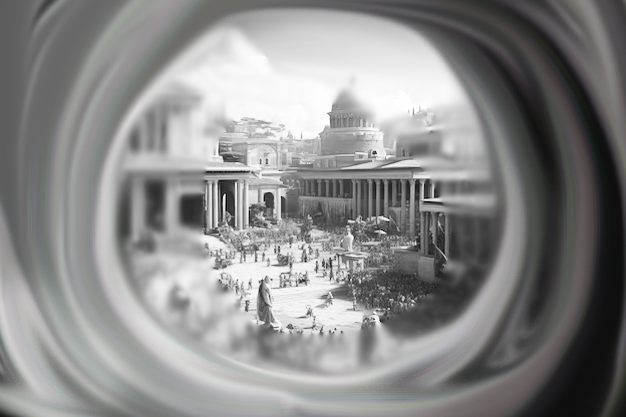
Excerpt from book 1 – Escape from Alexandria

I thought for this week blog I would share an excerpt from my first book The Battle for the Peacekeepers, Escape from Alexandria.

It’s just a small taster to whet your appetite.

Feel free to check out the other excerpts on this site too: When Yas discovers magic and A visit to Victorian London.

Escape from Ancient Alexandria

There was a ‘whoomph’ ahead of them and the doorway appeared. The creatures behind them had also spotted it.

“Sam,” urged Yas, looking behind her and seeing the creatures approaching. She threw another word ball, but this time the creatures just continued towards them, unimpeded.

Sam grabbed Yas and pulled her through the doorway just behind him. He made it through and landed on the carpet in the library but was jerked and pulled backwards. She stopped in mid-air, half in and half out of the portal. She screamed. One of the creatures had grabbed the back of her jacket in its mouth. The other, was trying to get its serpent head through the portal.

“Sam!” Yas screamed. She could see him moving about and trying to brace himself against the edges of the doorway, but her view kept switching between the two worlds.

“I’ve got you,” he shouted back. He grabbed her tightly, kicking the serpent head with one of his feet while pulling Yas as hard as he could. “Hold on!”

Yas kicked behind her, while also reaching her other hand for a better hold on Sam. She was able to push herself up on the sphinx’s head, and in return it lessened its grip. She felt the jacket rip.

“You little. . .!” she shouted angrily behind her, kicking furiously. She heard the creature whimper and then roar. Not wanting to see what it might do next; she looked forwards into the library.

“Sam!” she shouted again in alarm.

Sam continued to kick the other creature, while also defending them both against paw grabs from the first. It was tight for space, but he was able to pull Yas forwards a little at a time. If anything, her kicking against the creatures gave her the better leverage.

Suddenly, surprising them both, an arm appeared behind Sam. The creatures were pushed back sharply out of the doorway and Yas was pulled through. She fell onto the floor while Sam rolled to the side and stood up to see who had helped.

“Close the book!” said Janine Vickers sternly. She stood still, holding her hand out, palm up, uttering words that sounded foreign.

What happens next?

What a roller coaster of a ride! Well, you’ll have to buy the book to find out who Janine Vickers is and why she helped them escape.  Do Sam and Yas leap from the frying pan into the fire? Or not? Buy Book 1 The Battle for the Peacekeepers on Amazon and find out.

Psst… it’s available in both paperback and kindle editions.

Ciao for now!

Follow us on social media for the latest news and updates…
Trying to put together your puzzle of life?

Do you ever have questions in your life that you just can’t seem to answer?

You’re desperately looking for a solution and everything you try leaves you feeling as though there’s still missing pieces in your puzzle of life?

You’re not alone. That was Yas, in Book 1 The Battle for the Peacekeepers.

Yas’s puzzle of life

At the start of Book 1, Yas’s grandfather and adopted brother have been missing for two years and nobody seems to be looking for them. Worse, her parents won’t talk to her about it. She finds this frustrating and weird, but she figures you just get on with life. You graduate from school, go to college, get a job and live a life.

In Book 3 The Shadow Readers, we also learn that her father is dissatisfied with his work, and she thinks this is the way it’s supposed to be. What she’s learned is that life is not for living your dreams and that along the way, bad things can happen to anyone. She’s quite skeptical of life’s opportunities as a result and not surprisingly critical of her best friend‘s ideas about magical realms.

Yas also feels she’s being pulled by something, and she can’t figure out what. Deep down she knows there’s more, but her conditioning won’t let her see it. She’s curious about life, preferring to spend an afternoon in her passion of reading novels and learning about history from books.

They say opportunities arrive for those that attract them

Deep down, the opportunities that Yas attracts are focussed to the pieces of her life puzzle that she can’t yet put together. She works at a bookstore which gives her the opportunity to indulge in her passion. If asked she would probably tell you that she’d rather read history by those who have written it and put it up for review by the masses, than listen to schoolyard gossip and people’s opinions. Ultimately though, there’s more to her interests in stories.

Her best friend Sam is also not ‘popular’ at school, and is a bit weird, but that’s okay. He likes talking about magical realms and how his dad is lost in one. She wonders why she attracts the ‘odd’ ones. Then she literally falls into a realm, and it feels as though her life puzzle has exploded and sent all the pieces up into the air.

Direct experience is irrefutable

If you’ve ever experienced something deeply touching or moving, the paranormal maybe, you know that once you’ve experienced it there’s no going back. Your viewpoint on whatever it is has shifted forever and your puzzle of life now incorporates that.

This is what happens to Yas once she’s met the Great Oak and Red in the Forest Realm. After some convincing that it’s real, her puzzle of life shifts. She eventually realises that her grandfather and brother went missing because of a war between the Word Guardians and Controllers. Her parents refused to talk about it because they wanted to protect her. But only by seeing that picture could she fit all the pieces of her life’s puzzle together.

Listening to the deeper knowing’s

Finally, Yas could recognise the deeper feelings that she’d had all along as ‘knowing’s’. And she could see that her puzzle of life had shifted. Instead of getting on with life, now, for her and Sam, it was about finding a job that honoured your dreams, embracing stories and standing up for the freedom of readers’ imaginations. And more opportunities were about to come their way (see Book 3 The Shadow Readers) that would enable this.

So, if you have questions you can’t answer, try to honour those deeper feelings and ‘knowing’s’. Find time to embrace your passions, even if a small amount here and there in your week. And if you want to learn more how life unfolds for Yas and Sam, read the books in the series. Buy Book 1 The Battle for the Peacekeepers using the link below.

Follow us on social media for the latest news and updates…
Why can some characters wield magic in the outer world?

Is it a plot hole, if some characters can wield magic in the outer world?

Readers of the series might be wondering why some characters can wield magic in the outer world. After all, if magic is fueled by the imaginations of readers, then how is this possible? So, is this a plot hole in the Word Guardians series?

Who can wield word magic in the outer word?

In Book 1 The Battle for the Peacekeepers, Janine Vickers first demonstrates the ability when she saves Yas and Sam from mythological lions with human heads attacking them in Ancient Alexandria. She’s able to tidy up the magic that’s dropped onto the library floor and push it back into the book that the words came from. There are other examples too, but for those of you who have not read all the books yet (please do 😊), I don’t want to spoil the fun. It will be worth your time!

How can word magic be wielded in the outer world?

The next question I hear you asking is how can magic be wielded in the outer world? Well, we know that when we read, we imagine the scene happening in our mind’s eye. And as I’ve written about in The Worlds of the Word Guardians, the imagination powers the magical ink that enables the creation of the realm, in which the reader then views the story playing out in their mind’s eye. But the magic doesn’t just stop there.

We know when we tell other people about a good book we’re reading, we see that book play out in our mind’s eye again. So, in the same way, the Word Guardians characters can ‘pull’ on the same magic in the outer world. It takes much more focus and effort, but for those practiced in wielding word magic in the realms, it’s possible and boy do they do it well.

So, is it a plot hole, or a twist then?

Well, yes, you got me, it’s not a plot hole. It was an intentional twist that I wanted to include because it’s unexpected. Magic should stay where it’s created right? In a realm. But is the magic there to be drawn on by the reader’s imagination or does the reader’s imagination create the magic? Ultimately, it’s both.

To see what I mean, you’re just going to have to read the books in the series. Buy Book 1 The Battle for the Peacekeepers using the link below and start watching for the characters that can wield word magic in the outer world. It might surprise you who can and who can’t. Happy reading!

Follow us on social media for the latest news and updates…
Imagining a better way to travel, a magical portal

I had the opportunity to travel recently, part business and part visiting family. It was lovely to visit but I have a love, hate relationship with travel. It takes so much effort. Busy airports, being sat in an airplane for hours with many people around you, long travel days, the list goes on. So, I find myself wondering, is there a better way to travel?

Could it be as easy as stepping through a portal?

In the Word Guardians series, our adventurers can enter different realms simply by walking through a doorway. Could we?

Yeah, you have to have a strong magical ability and a key to the doorway (as detailed in Who can visit the realms of the Word Guardians), but in The Battle for the Peacekeepers, Yas and Sam manage to do just that. They visit Victorian London and ancient Alexandria, and more.

Just imagine the possibilities of simply stepping through a doorway to your destination. You get to skip airport crowds, the waiting, delays and the effort. If all this was possible, where would you choose to go? 

The journey is the destination

That old adage of ‘the journey is the destination’ came to me while I was thinking about my answer to ‘where I would go?’. While stepping through to a destination sounds exciting, what you visit and do while there is equally important.  

If we just visited a beach, looked out at the sea and then return to our own world, it’s pleasant, but have we really experienced the place? If instead we spend time there, the place starts to become a part of our story, and our experience is richer as a result. 

What I’m trying to say is that why you choose to visit somewhere, what the intended story of your visit is and what your experience becomes, is important.  

We see this in the Word Guardians realms also. Each realm is formed by readers in the outer world unconsciously collaborating. Their imagination powers magical ink which builds worlds, creates actors and enables stories to play out. When Yas and Sam visit realms, they interact with these worlds and change the storylines. If it fits with what a reader in the outer world might expect to see, then it becomes part of the story.

So, what’s a better way to travel?

I started out in this blog by thinking about how we could avoid the inconvenient parts of modern-day long-distance travel. And I stand by that. Travel takes effort and its toll on us.  

If we had the ability to step through a doorway to a destination, that would be amazing, but I don’t believe it’s the complete answer. I think that by being more intentional about the stories we’d like to have when we visit somewhere, that’s an important part of it too. Whether planned or not, that forms a story that we’re part of forever.

Both Yas and Sam, typically have a purpose in mind when visiting a realm but then the story often unfolds in unexpected ways. How they take opportunities and adapt to the changing stories, that’s their story and one that I feel privileged to have been able to imagine and write. To learn more, please buy book one using the link below. 

I’d love to hear about your thoughts on travel too. Feel free to send a comment below or by using the contact form. And to journey with Yas and Sam through the realms, read The Battle for the Peacekeepers, available at the link below.

Follow us on social media for the latest news and updates…