
Trust, the burden of inheriting a secret war

One of the questions at the heart of The Word Guardians and the Battle for the Peacekeepers is simple: What happens when the people you trust most refuse to tell you the truth?

For Yas, the answer is complicated.

Growing up, Yas knew there were gaps in her family’s story. Questions about her grandfather were always met with silence, quick changes of subject, or vague answers that never quite explained anything. Her parents weren’t trying to be cruel. In fact, they believed they were protecting her.

The Secret war

They knew what her grandfather had been involved in. They knew about the dangers, the conflicts, and the secret war that existed beyond the ordinary world. Most importantly, they knew that once someone became aware of that hidden reality, there was no going back.

So, they stayed silent.

The problem with secrets

Secrets rarely stay hidden. They tend to grow larger in the spaces where answers should be.

For Yas, that silence was difficult to cope with. On the one hand, books were her solace, a place where she could escape when unanswered questions became too much. She knew how the real world worked around her, but she didn’t understand why her parents wouldn’t talk about her grandfather? What had happened to him? What had he done that was so bad?

Then comes the person she trusts.

The trusted mentor

Every young person needs mentors, people who encourage curiosity, learning, and growth. But what happens when a mentor unknowingly opens a door and the tantalizing possibility of answers about her grandfather.

Or perhaps they knew exactly what they were doing?

Through her mentor and the discovery of hidden magic, Yas begins to realize that words are far more powerful than she ever imagined. Books become more than collections of stories. They become magical realms, alongside her own, with doorways between them.

Suddenly, the questions she’s been carrying her entire life start to gain answers. But every answer creates a new problem.

Trust, the inherited burden

Who can Yas trust? This is the burden of the secret war that she’s inherited.

Her parents clearly knew something, but they refused to explain it. Her mentor encourages her exploration, but for what purpose?

There’re others too that she meets along the way. They each have their own history, motivations and secrets. There’s her best friend Sam, who tells her about the existence of magical worlds before she’s ready to believe him. There’s Janine Vickers who is angry at Yas when she and Sam disobey her instructions. And there’s the mysterious Penn, who comes from old money and secrets.

And the one common thread is that when everyone claims to be protecting you, how do you know who is actually telling the truth?

This is one of the central themes explored throughout Yas’s journey. Trust is rarely simple. Sometimes the people who love us hide things because they’re afraid. Sometimes mentors make mistakes. Sometimes curiosity leads us exactly where we’re meant to go, and sometimes it leads us straight into the danger that others were trying to protect us from.

Yet despite the uncertainty, Yas keeps moving forward because some questions refuse to stay buried.

Answering the questions determines who we are

The desire to understand who we are, where we come from, and why our lives have unfolded the way they have is incredibly powerful. For Yas, that drive becomes impossible to ignore. The mystery surrounding her grandfather, the strange pull of magical books, and the growing realization that a hidden war is being fought in the realms all combine into a journey she never expected to take.

And once she takes that first step, everything changes.

If you enjoy stories filled with magical worlds, hidden histories, dangerous secrets, questions of trust, and young heroes discovering their place in a much larger conflict, then Yas’s adventure is waiting for you.

Pick up Book 1: The Word Guardians and the Battle for the Peacekeepers and discover the beginning of Yas‘s journey into a world where words hold power, secrets shape destinies, and the truth may be more dangerous than anyone imagined.

Follow us on social media for the latest news and updates…
When the magic hidden inside books is real

Ever had that feeling in life when a book feels real? Not just entertaining. Not simply words on a page. Real. Magic.

A story can stay with us long after we close the cover. Characters can feel like friends. Entire worlds can become places we remember as vividly as somewhere we’ve visited. Sometimes a single sentence can change the way we think forever.

Those ideas were the heart of book 1, The Word Guardians and the Battle for the Peacekeepers.

In the Word Guardians series, books are far more than stories. They are gateways connected to realms born from imagination itself. Every reader who dreams, imagines, fears, or hopes while reading leaves something behind, energy that helps shape these hidden worlds.

The Magic Hidden Inside Books

Most people never realise those realms exist. Yas certainly didn’t.

To her, books were comfort, when real life became difficult to understand. Books were an escape. Adventure. She loved the quiet safety of stories and the feeling of disappearing into another world for a while. Working in a bookshop deepened that connection and reaffirmed what she thought was real. Surrounded by shelves and stories every day, she thought she understood what books were meant to be.

But she had no idea that magic was woven into every page.

Her best friend Sam kept trying to tell her. He believed there were worlds hidden beyond stories, places where imagination became reality and where certain readers could cross between them. To Yas, Sam’s beliefs sounded impossible. But Sam knew the truth because his father vanished while visiting a realm.

Then, direct experience of the magic hidden inside books changed her thinking forever. She believed, and curiosity soon entangled Yas in something far more dangerous.

The war in the realms

Book 1 sees Yas start to uncover the secrets hidden around her family, her grandfather’s disappearance, and the strange truths concealed by her parents. She begins to realise that stories hold genuine power. The realms are real. Magic exists. And there are people willing to wage war to control it.

The realms are where the conflict between the Word Guardians and the Controllers begins.

The Word Guardians believe imagination should remain free. They protect the realms and the readers connected to them, guarding the fragile balance between worlds. To them, stories represent possibility, creativity, and freedom of thought.

The Controllers see things differently.

They understand that stories influence people. They shape beliefs, emotions, fears, and dreams. If imagination can create worlds, then controlling imagination means controlling reality itself. The Controllers want to manipulate the realms and use their influence over readers in the real world for their own purposes.

At its core, The Word Guardians and the Battle for the Peacekeepers is a story about the power of magic hidden inside books.

When magic becomes literal

Stories have always carried a kind of magic. They allow us to see through someone else’s eyes. They transport us beyond ordinary life. They inspire courage, curiosity, empathy, and wonder. Entire generations have been shaped by the stories they grew up with.

In The Word Guardians series, that idea becomes literal. The realms exist because readers believe in stories deeply enough to give them life.

But the stories also explore an important question. What happens when someone tries to control imagination itself?

In book 1, as Yas and Sam uncover the hidden war between the Guardians and the Controllers, they are forced to decide what stories truly mean, who they can trust and how they can protect the imagination of readers. Because some magic doesn’t come from spells, sometimes it begins with turning a page.

So, buy book 1 now, using the link below (to take you to amazon), and start your journey into the magic of the Word Guardians.

Follow us on social media for the latest news and updates…
If magic was real, what would we conjure?

Book 4 The Lost Beginnings, features the Otherworld, a realm in which everyone can use magic, and there’s even a law enforcement officer to police unsafe and dangerous usage. Having re-read some of it recently, it got me thinking… if magic was real, what would I conjure? And what would it say about me?

The possibilities are endless. Or are they?

Asking others, there were varying responses. Having infinite pizza might solve the question of what to have for dinner for a while, and a teleportation device sure would cut that daily commute and give back some time. Most people initially start big, a large house and being able to have as much money as they needed. But then, money ultimately buys freedom and time, so why not go straight to that instead?

Now, let’s add a restriction to how much magic you can use. In Book 4, the use of too much magic causes the realm to become unstable and liquefy. It reverses what we see in Book 1 when Yas visits Victorian London and sees how magic can create the realm. So, think again about your choices. What can you achieve without constantly having to conjure? How much magic might be too much?

Whatever your response, it prompts some deeper questions. Why did you choose what you did and what might you really be seeking?

What are you really searching for?

Are you looking for more time, to be able to think without feeling under pressure, and to be able to get more done in the day. Maybe you want time for you, when all the responsibilities of the day are taken care of?

Perhaps you’re seeking clarity, looking to understand people and the world around you without having to second guess. What did that person really mean? What really matters in this situation and what choice can I make that I won’t be replaying in my mind later?

Or maybe you’d decide to conjure something that benefits others? Heal disease, solve hunger, help the climate?

Digging deeper into why you’d conjure what you decide takes us to the last and perhaps most uncomfortable question in this thought experiment, what does that say about you?

Choices speak words

Sure, in the moment you can choose to conjure anything convenient. But remember, if there’s a limit to how much magic you can conjure, you must be careful with your wishes. Do you still want to make it immediate and convenient, or should it be more meaningful for you?

To be meaningful though, you need to think about what that means to you. Do you want something grander for yourself, nobler for others or subtler for quality of life for you and your loved ones?

Whatever you choose, it paints a picture of you. And that picture may or may not be in line with the picture you feel like you’d like to portray about yourself. Ultimately the ability to conjure anything gives us a freedom. And with that freedom, how do we choose to use it?

What do the Word Guardians conjure?

The same dilemmas play out for Yas, Sam and their friends in the realms. Sure, they have battles and need to conjure weapons and shields in the moment for self-defence, but they still must think about those deeper questions. Do they seek defence or retaliation? Do they seek to win at all costs or use force only to regain balance? Ultimately, their ‘why’ is to protect the imagination of readers, and the magic that they cast is in service of this.

To learn more about the magic of the Word Guardians, and their enemies, The Controllers, read the book series. See also what resonates (or doesn’t) for you in how you’d like to react to the challenges that the Word Guardians face.

Click the button below to view and buy the books in your usual Amazon store (available in paperback and kindle editions).

Follow us on social media for the latest news and updates…
The realm visitor’s survival guide for the Word Guardians

If you could open a portal and step through to a magical realm, as the Word Guardians do, what should you take with you? I thought I’d explore the idea of a Realm Visitor’s survival guide in this week’s blog.

Travelling to a realm is different to adventures in the outer world. Assuming you can enter a realm, you can draw on the magic that’s present while you’re there to conjure food, clothing and more.

So, you don’t need much in your survival pack really. However, there’s two key pieces you do need though, for a visit to a realm.

Opening a portal to a realm

The first, and most important part of being able to visit a magical realm, is being able to open a portal. In Who can visit the realms of the Word Guardians series?, I talked about having belief, magical ability and a key.  We see how this comes together for Yas in Excerpt from Book 1: When Yas discovers magic and how Yas then comes to believe, develop her innate magical ability and open portals to other realms.

For Yas and Sam, they have several keys on the necklaces they wear. The faces of the dies, the pendants, help them both find doorways into realms and detect when a portal is nearby. They discover other keys too, but their pendants also help them with the second part of visiting a realm.

Getting home again

Like any adventure, you need to get back home again. When visiting a realm, that means knowing where the portal is that will get you back to the outer world. This could be the same doorway that took you there, as Yas and Sam find when visiting ancient Alexandria (Excerpt from book 1 – Escape from Alexandria). It might also be a portal that can only be opened by someone else, which causes Yas and Sam to become trapped in the Otherworld in book 4 – The Lost Beginnings.

An exit portal can be opened the same way as a portal to enter a realm. You need belief, magical ability and you need to know where the door is. Magical ability comes a little easier once in a realm and magic is all around you, but it depends on the realm as you’ll see in the upcoming book 5, The Story Thief.

What about surviving in the realm?

As I mentioned earlier, while you’re visiting a realm you can draw on the magic that powers it to conjure what you need to survive. Food, drink, clothing, can all be created to provide your daily needs. But, as you find out in the stories, you can also get injured, or worse. So, caution is needed, as you would exercise on any adventure.

What’s in the realm visitor’s survival guide

So, a realm visitor Survival Guide is maybe a little different from what you might expect, but important, nonetheless. You need the ability to open portals to visit a realm and get home again, and you need to have your wits about you while you’re visiting. Without the ability to open doorways, you’re not going to get very far on your magical adventures, and this learning is a big part of book 1 – The Battle for the Peacekeepers for Yas.

To see how this plays out for Yas and her friends, click the button below to view and buy the books in your usual Amazon store (available in paperback and kindle editions).

Follow us on social media for the latest news and updates…
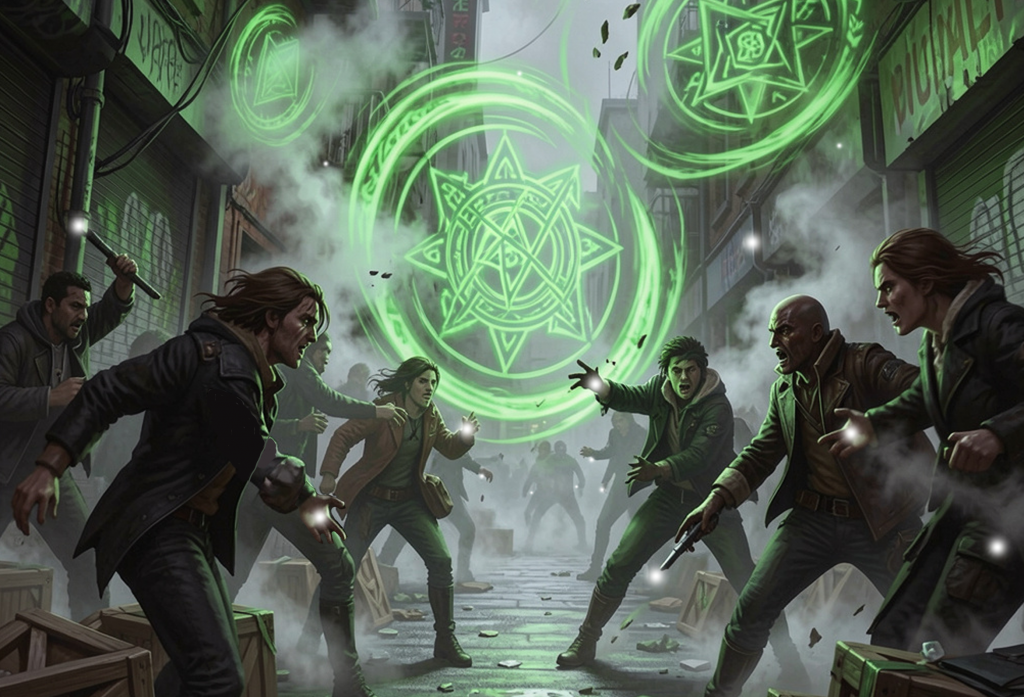
If you could control the minds of people around you

Continuing the topic of mind control this week (see what if books could control your mind), here’s another question for you… If you could control the minds of people around you, would you? What might you do?

What could you achieve with mind control?

Would you use mind control for your own personal gain or to help others?  One might make you a villain, the other a hero.

Even if your aim is to help someone else, what about their free will and the ethics of using mind control.

Free will

We like to think we have complete freedom of choice, to make our own decisions and shape our own destinies. And if someone else is controlling or influencing us, then our free will is diminished. Living in a world where we are fortunate to have freedom, being controlled is an uncomfortable thought. What right does anyone have to make our decisions for us, or influence those?

And yet, there are existing influences around us that unconsciously shape our decisions. The people close to us, the environment around us, the news, media, advertising and more. What we see and hear seed thoughts and help shape beliefs that may influence our own future actions, without us being fully aware.

How core values affect mind control

If we saw that someone was being controlled and their actions influenced, what reaction might that prompt in us? Would we want to try to help in some way, would we treat them as ‘not my circus’, or would we want to jump in and take advantage of the situation?

Whichever choice you lean to, that speaks to your underlying core values. I believe that our values would drive our feelings and actions in these matters. There may be conflicts there, as Detective Wheeler had to navigate, but ultimately our values will help shape what we do.

The ethics of mind control

Ultimately, over and above our own values, the ethics of mind control are key.

It’s easy to dismiss the ‘bad’ of mind control and say that if it reduces someone’s freedom, then it shouldn’t happen. I think we can probably agree that if the mind control is not for someone’s greater good, then it shouldn’t be used. But what if it could be used for good?

If it could help someone recover from an illness or trauma, or help a convicted criminal reform, would that be an acceptable use of mind control? Perhaps yes, if that person freely consents.

If mind control is forced upon someone, then that further diminishes their freedom. However, if it is freely agreed to and for a specific purpose only, then that removes some of the concern. The scope or ‘specific purpose’ agreed to is also key. Privacy is an important consideration here too, and so any mind control should be constrained to that purpose and associated information.

Wrapping up

It’s a deep topic. If you had the power to control someone’s mind, the answer is complicated.

Aside from your own values and whether you thought you might be acting for someone else’s greater good, there’s their free will and ethics to consider. It’s a topic I touch on in book 1 The Battle for the Peacekeepers, when Yas has to make a decision in battle. (I can’t say more as it will plot spoil, you’ll have to read it for yourself.

To learn more about how mind control in the Word Guardians series, click the button below to view the books in your usual Amazon store (available in paperback and kindle editions). Buy book 1 today, read how mind control is used by the Controllers and how Yas handles the same challenge in the Battle for the Peacekeepers.

Follow us on social media for the latest news and updates…

What if books could control your mind? Could you resist?

I thought I’d give you a question to puzzle over, in this blog… if books could control your mind, could you resist?

A recap… what forms the worlds of the Word Guardians

In What are the Worlds of the Word Guardians I talked about word magic and how it forms the worlds, or realms, that the characters visit.

When reading, a scene forms in the mind’s eye of readers and the story plays out. This is not just imagination; it takes shape in a magical realm. It’s like a stage, where props and actors are formed from the magic and play out the scene. Many readers can unconsciously collaborate, witnessing and shaping the scene in the mind’s eye, and the realm responds, changing what’s presented to match the collective imagination of the readers.

How the Controllers control

In Introducing the Controllers, the Word Guardians ‘bad guys’, I described how this process of imagination can be influenced. Controllers can visit and change the scene in the realm using word magic. This can then be ‘seen’ by readers and influence their imagination. It can be mundane, or more impactful and that’s where the battle between the Controllers and the Guardians starts to play out. It’s a battle for control versus free will.

On a visit to Victorian London, Yas learns that most readers ignore things that don’t make sense. But subtlety is the key here. The Controllers make changes that readers accept as a seed and then that can be expanded upon to greater effect. It influences the thoughts of readers, placing suggestions of fake news, or as we see with Book 3 The Shadow Readers, readers can be incited to action to further the Controllers’ goals.

So if this happened to you, how would you know?

If someone was subtly influencing your thoughts, would you recognize the signs?  With so much influence in general in the world already, what ways can we safeguard our minds?

Like the Shadow Readers in book 3, if we’re being controlled and taking uncharacteristic actions, or performing unhealthy habits we hope that family and friends would challenge us. That would be one call back to reality.

If it’s more subtle though, as we’re influenced by stories, it could change our beliefs over time. Perhaps we might express those views, but other than that, there may be no external signs.

What about if a Controller influences us to say or do something that conflicts with our own values (see Waking up to core values in a time of crisis)? Would we become caught up in it or would it jar internally and cause us to pause for a moment?

Could you resist?

Ultimately, we must question what we read, see and hear and I’ve touched on this from the Guardians perspective in How do the Word Guardians determine the truth. We should ask who has presented a story and why now? What might benefit whom from the way in which it has been portrayed? Only then can we start to know our own thoughts and form our own beliefs, versus trusting what comes to us.

So, what do you think? If a book started to control your mind, would you notice? Could you resist? I’d be interested to hear what you think.

And, to learn more about how mind control happens in the series, you’ll have to read the series. Click the button below to view the books in your usual Amazon store (all the books in the series are available in paperback and kindle editions).

Follow us on social media for the latest news and updates…
What makes a villain a villain? Who is Orfeo?

Continuing the theme of Who are your favourite characters in books? and What makes a hero?, it’s time to look at what makes a villain a villain.

What is it that sets a villain apart from an antagonist?

Who are the villains in the Word Guardians series?

Well, the villains of the series are the Controllers. They want to influence the minds of readers so that they can achieve their goal, control. To avoid plot spoilers, you’ll have to read the books to identify and understand all the villains in the series. There are some characters that act as antagonists but aren’t, and vice versa. And they seem to be this way because they are either protecting themselves while they figure out who they can trust or just acting out an agenda and haven’t yet revealed their cards. I can however share the name of one of the major villains of the series though, and that’s Orfeo, the vampire with a grand plan.

Who is Orfeo?

When you first meet Orfeo, he’s busy manipulating Detective Wheeler (who I’ve talked about in Waking up to core values in a time of crisis. Wheeler tells him what is going on within the police force, so that Orfeo can gain control of the Police Commissioner, as we see in Book 2.

Why does he want to do this? Like all good villains he wants control the story, in this case both inside and out of the magical realms. He uses a form of telepathic control, and uses some readers to incite all sorts of outcomes, none of which are pleasant.  Orfeo claims all the trouble is from a small faction of insurgents called the Word Guardians. And he does this to justify a crackdown from the police.  Ultimately, he wants the Word Guardians captured.

Villain or just antagonist?

So, knowing a little more about him, is Orfeo a villain or just an antagonist? To answer the question, we need to look at definitions of each.

A dictionary definition of an antagonist is that of someone opposing another. This doesn’t necessarily have to be evil or criminal in nature, but typically is someone opposing a protagonist within a story.

In contrast, the dictionary definition of a villain is that of someone blamed for evil or difficulty. It’s antagonistic in nature, but it indicates a deeper level. It’s likely criminal, wants to see the downfall or deposing of protagonists and is often dishonest and immoral in nature.

Based on these, Orfeo doesn’t sound like just an antagonist, does he? He’s wanting to expose the Word Guardians and while doing that he’s seeding and growing hatred of their cause, for his gain. It’s immoral and points to a wider evil, that of control of people’s imaginations so that they can do his bidding.

But who prevails?

Be honest, you want to know who wins, right? The Word Guardians or Orfeo?

And of course, I can’t tell you here. You’re going to have to read books 1 and 2 to find out. What I can tell you though is that you’ll also learn a little more about his background, his relationship with his number one, Raelinn, (who I’ve also talked about in The good and bad sides of loyalty), and some of his motivations for his dastardly deeds.

So, click the button below to view the books in your usual Amazon store (all the books in the series are available in paperback and kindle editions).

Follow us on social media for the latest news and updates…
New Year, old beginnings, here we go again

It’s the New Year, a time for hopes and plans for the coming year, new beginnings. But be honest, how many of us have had that thought of ‘here we go again’? That sense of old beginnings and we’ve tried this before, what will be different this time?

Whether it’s a new diet and exercise regime, to have more time with the family, or plan some bigger ticket items like travelling, it’s like we felt as though we had clarity during the holidays but now (for many of us) as the normal working weeks resume, the motivation and drive become lost.

With this in mind, I thought I’d share an excerpt for a character from Book 4 Lost Beginnings who had this exact same feeling.

Mira’s drive to work

The next morning, Mira Cornwalth was driving to work, listening to the radio. It was depressing, like the weather. Rain hammered the windows of her old SUV, par for the course really in the temperate rainforest of Vancouver’s North Shore. She mused to herself, as she did often, why she was here.

She slowed, approaching a red light at an intersection. She knew the logical train of events leading up to now, but there always seemed to be something that she’d missed in her story. Perhaps it was the rain and greyness of the day that soured her mood. She was also late, again, and wanting to get through the traffic faster.

The lights changed and she grew impatient with the car in front not moving.

“Come on,” she moaned. She ‘bipped’ her car horn “It’s green!”

The man in the car in front gestured angrily out of the window.

Mira lowered the window in response and shouted back. “Really!” She got a spatter of driving rain in response, and quickly closed it again.

The car started moving and Mira took the opportunity to move into the left lane, hoping to get past the driver.

She turned up the radio, as the traffic report started. She’d already been caught up in one slow line because of a flooded lane. She was hoping to avoid another delay. Her boss would not be happy with her tardiness again, and she was fed up with making the same excuse.

She pulled up at another red light, this time turning right and at the head of the line. Fortunately, no-one was crossing but her fifteen-year-old SUV decided to sputter and die on her.

“No, no,” Mira complained. “Come on,” she urged, gripping the wheel with one hand while trying the ignition again.

A car horn behind her bipped.

“Yeah, well, I deserved that,” she said to herself, seeing the irony of the situation. “Come on,” she urged the car again.

She closed her eyes, rubbed her hands and placed them on the steering wheel.

There was a flash of words running around the rim and then down the steering column and into the ignition. The car sparked into life as a second car horn beeped her from behind.

“Yeah, yeah,” Mira replied, gesturing her irritation with her hands. She shifted the car into gear and started to make the turn. “Jeez.”The next morning, Mira Cornwalth was driving to work, listening to the radio. It was depressing, like the weather. Rain hammered the windows of her old SUV, par for the course really in the temperate rainforest of Vancouver’s North Shore. She mused to herself, as she did often, why she was here.

She slowed, approaching a red light at an intersection. She knew the logical train of events leading up to now, but there always seemed to be something that she’d missed in her story. Perhaps it was the rain and greyness of the day that soured her mood. She was also late, again, and wanting to get through the traffic faster.

The lights changed and she grew impatient with the car in front not moving.

“Come on,” she moaned. She ‘bipped’ her car horn “It’s green!”

The man in the car in front gestured angrily out of the window.

Mira lowered the window in response and shouted back. “Really!” She got a spatter of driving rain in response, and quickly closed it again.

The car started moving and Mira took the opportunity to move into the left lane, hoping to get past the driver.

She turned up the radio, as the traffic report started. She’d already been caught up in one slow line because of a flooded lane. She was hoping to avoid another delay. Her boss would not be happy with her tardiness again, and she was fed up with making the same excuse.

She pulled up at another red light, this time turning right and at the head of the line. Fortunately, no-one was crossing but her fifteen-year-old SUV decided to sputter and die on her.

“No, no,” Mira complained. “Come on,” she urged, gripping the wheel with one hand while trying the ignition again.

A car horn behind her bipped.

“Yeah, well, I deserved that,” she said to herself, seeing the irony of the situation. “Come on,” she urged the car again.

She closed her eyes, rubbed her hands and placed them on the steering wheel.

There was a flash of words running around the rim and then down the steering column and into the ignition. The car sparked into life as a second car horn beeped her from behind.

“Yeah, yeah,” Mira replied, gesturing her irritation with her hands. She shifted the car into gear and started to make the turn. “Jeez.”

Hopes and dreams can get lost in the day to day

When we need to focus on the detail of our day-to-day activities, we lose sight of bigger picture dreams and plans. We don’t have the time or energy to get to them. Before we know it, tomorrow becomes a week and we catch ourselves self berating when we have a moment of space and stillness.

Typically, our working life involves our rational, logical, right side of the brain. Even if our occupation is creative in nature, there’s planning and organising, and that’s without considering all the other tasks in life as parents, adults, homeowners etc. It takes time and energy and can become overwhelming quickly, preventing us from getting to that extra thing that’s for us. We lose grip of our plans despite our best efforts.

Making it sustainable

From my own life, I know that letting go of a goal but having a sustainable practice is key to moving forwards with any dream and plan. With my own writing, I started out with setting aside an hour a week, typically on a Sunday morning. I didn’t set a goal for how much I needed to achieve each session, nor how long I might take to write a novel. I just sat and wrote. I found that I enjoyed the practice, it fit into my life, and I was rewarded with what I was able to create over time. These three things have not only enabled me to sustain it and make it a habit, but I find it’s something I look forward to each week, and it’s something that I continue with today.

Ultimately, dreams and plans don’t have to get lost in the day to day if you can find even some small way to include them in your week.

How will you make your dreams and plans sustainable in 2026?

Now turning it over to you, what plans and dreams do you have for 2026? And how will you make time for a sustainable practice in your week to start to progress towards these? Feel free to share in the comments below.

And, to learn more about Mira’s adventures in the realms, buy and read Book 4 The Lost Beginnings. P.S. You’ll want to read books 1 to 3 too as that helps give the background for the other characters. All the books are available on Amazon in paperback and kindle editions. Click the button below to go to your country’s Amazon store.

Follow us on social media for the latest news and updates…

The magic of the season, and how do we find it?

It’s the last month of the year, and for many cultures and faiths it marks a time of preparation leading up to the holidays. It also evokes a lot of memories, dreams and feelings too, so let’s talk a little about the magic of the season.

Memories, dreams and feelings

I don’t know about you, but I find myself thinking back to past holiday seasons, especially those as a child. The overriding feelings and memories is a sense that so much was possible.

Without adult responsibilities, there was a freer sense of curiosity, wonder and magic. I think as adults it’s something we try to recapture for ourselves. It’s a way of going back to that innocence of the inner child.

Thinking about the characters in the Word Guardians stories, for Yas it relates to her sense of curiosity and wonder when falling into her first realm in The Battle for the Peacekeepers. So here’s an excerpt of her realising she’s somewhere magical. (To set the scene, feel free to re-read the excerpt in When Yas discovers magic).

When Yas first fell into a realm

After landing on the forest floor, mentally she checked through her body for any signs of pain. There were none. A forest scene came into focus around her. Looking up, she saw the branches of a tree between her and a blue, partly cloudy, sky. A huge trunk was at the top of her vision, behind her. It seemed so tall that she couldn’t tell where the tree ended and the sky began. There were other trees around her, but not as tall or as full of leaves in their canopies. They let in wider shafts of sunlight. Remnants of leaves she had crashed through floated down through the beams of light along with twigs, branches, nuts, and flies that had been disturbed. The tree’s limbs swished and swayed back to their original positions. As the scene stilled around her, she noticed other sounds and smells. In the distance, there was bird song. She could smell a freshness she associated with morning dew, along with damp bark and soil. The whole scene reminded her of a forest she had once visited as a child on a school trip to England. The New Forest, she remembered it being called. And this place looked so neat and tidy, as if it was new.

She chanced movement into a sitting position, incredulous that she was where she was. One minute the shop, now a forest. She figured she must have taken a bump on the head and that the world was going on around her unconscious body. Soon she’d be waking up in a hospital with her worried parents onlooking.

“Wake up,” she commanded herself. “Come on!” She tried hitting herself on the arm. It didn’t work, so she figured that she’d need to deal with wherever she was.

She heard a light rustling nearby. Its lightness suggested a small creature searching through the leaves for food. She moved her head slowly, so that she didn’t frighten it. There was still no pain. That was a good sign. From what she remembered of the view above her, it was probable that she had fallen a very long way indeed and she should have been injured. Looking to her side, she glanced movement. About ten metres away was a small grey squirrel, searching.

“Where did I put it?”

That surprised Yas. A talking squirrel. It immediately triggered thoughts that challenged her perception of reality. What was she was experiencing right now? She was clearly concussed, she figured, but what state was she in physically back at the shop? Had McVale arrived back yet from her chores? Maybe she had tried to wake her up and failed? That was a worrying thought. She’d call the paramedics, Yas reasoned. They’ll be picking me up and carting me off to hospital. That’s what would be happening now. This was her mind’s way of keeping her from the shock of serious injury. Then another line of reasoning caught up. Hold on, I only fell from a kick-step. How bad could it be?

Marrying dreams and reality

As for Yas in the above excerpt, the challenge is in allowing dreams not to be closed off in our thinking. It’s all too easy to shutdown what seems to be unlikely or impossible, based on our experience and conditioning of the world around us.

But does that mean that the magic isn’t there?

The message is all around us

The message the magic of the season is all around us. We see it in movies, adverts, books and more. At this time of year, it’s pretty much everywhere and impossible to avoid.

So, if it’s there, why don’t we see it? Often, we’re too busy performing all that we have to do in our daily lives and in preparing for the holidays that we don’t find it.

The magic of the season

So, the question is, how do you find the magic of the season? Does that curiosity and good feeling arise from watching a movie, spending time with family and friends, seeing holiday lights, or something else?

Feel free to share below what evokes the magic of the season for you, and please accept this as a gentle nudge to take some time this season to do it.

And as always, to learn more about Yas’s adventures in the realms and how her wonder and sense of magic develop, buy and read Book 1 The Battle for the Peacekeepers. It’s available on Amazon in paperback and kindle editions. Click the link below to go to your usual Amazon store.

Wishing you all a wonderful holiday season.

Follow us on social media for the latest news and updates…

What trust is and why it is important to us

Welcome to this week’s blog.  I thought, this time I’d raise the question of what trust is and why it is important.

How do we trust someone else? What impact does it have on us when we do or do not have it?

And by way of example, I thought I’d share an excerpt from Book 2 The Twisting Tales

Detective Wheeler and Raelinn in The Void

“What are you doing?” shouted Raelinn from the end of the carriage. She started to make her way down and was incensed. “Just let me go!”

“No!” he said, exhausted. “We’re just going in circles, repeating the same story!”

“You’re lying!”

The train was accelerating out of the station. The lights of the station moved behind them and it was pitch black outside. The windows reflected the interior of the carriage.

“Why would I?” retorted Wheeler. “Don’t you see? It’s the Void?”

‘The Void,’ Raelinn thought in her mind. That rang a bell. A distant memory of a battle. Then it faded and she saw the face of the man that had tricked her and brought her here. He needed to pay.

“Orfeo told me to keep an eye on you!” she seethed. “For Index! He said you were not to be trusted!”

“So, why don’t you hit me some more then. Fly at me in rage, like you usually do about now!”

Raelinn flew down the carriageway, arms extended, with her fangs bared. Wheeler knew what to do. He dropped down, catching her and rolling her over his head. He got back on his feet quickly.

“You said I was important,” Wheeler said, watching Raelinn and playing along with what he remembered having happened before, to see if it jogged her memory.

“Yes,” she replied, hissing. Then she stopped for the merest of moments and looked confused. “This?” she asked. “I remember something.”

“Yes,” Wheeler replied. “It’s taken you a while, but what do I know? As you said at the Battle for the Peacekeepers, I’m just a simpleton!”

His words seemed to jog a memory for Raelinn. She observed him for a moment.

“You’re messing with my head!” Raelinn shouted. She moved towards him firing word arrows.

Wheeler sighed and created a shield, deflecting the word arrows. They penetrated the walls of the carriage and it started to unknit.

What happens when we don’t trust someone

The excerpt shows that when trust is missing in a relationship, pretty much everything that’s said or done is questioned. Why is the other person saying or doing that? What are they hoping to achieve? Does it also benefit me and others?

It also underpins what we take as read or not from other sources in our lives, and I touched on this in In Life, who decides what’s the right news?

In stressful moments if the trust is not there it can lead to disaster, as Raelinn and Wheeler found out. They are literally at each other’s throats, and it takes effort for Wheeler to convince Raelinn that they need to work together to escape The Void.

The flipside. How trust forms

Conversely, when we do trust someone, we are much happier to take what is said and done as read. We know from experience that the person will speak and act in line with a particular pattern of behaviour and over time we come to rely on that behaviour.

The Mirriam Webster dictionary definition of trust includes the phrase ‘reliance on the character, ability, strength, or truth of someone or something’. It also mentions ‘one in which confidence is placed’, so trust is an ability to rely on someone else to make decisions and take actions in line with a particular direction.

Turning it over to you

I’m conscious I’m no expert in this topic, but I wanted to prompt the questions as I think trust and how we build it is a valuable concept to reflect on. So, for you, what does trust mean and what does someone else have to show to earn yours?

And while you’re thinking about that, if you want to learn more about what happens to Raelinn and Wheeler’s opposition in The Void, buy and read Book 2 The Twisting Tales (you’ll have to read book 1 first to set the scene 😊). Both are available in paperback and kindle editions.

Happy reading.

Follow us on social media for the latest news and updates…