What things do we see but don’t see

In The Word Guardians and the Battle for the Peacekeepers, McVale makes an intriguing observation to Yas. She indicates that readers do see visitors to the realms in their mind’s eye as they read but tend to dismiss anything they’re not expecting. They become things we see but don’t see.

When we read a book, our minds create a world from the words on the page. We picture the characters, the places they visit and the events that unfold. But we also make assumptions about what belongs in that world. When something doesn’t fit, perhaps our minds quietly dismiss it.

McVale’s observation is part of the magic of The Word Guardians, but it also makes me wonder about our own lives. Does this happen outside the pages of a book?

Seeing isn’t always noticing

We go through life making assumptions about the world around us. We recognise familiar places, form impressions of people and develop ideas about how things work.

These expectations help us make sense of the world. But they can also influence what we notice.

We might overlook something that contradicts what we believe. We might interpret someone’s actions according to the opinion we’ve already formed of them. Or we might dismiss an unfamiliar possibility simply because it doesn’t fit our assumptions.

Sometimes, we’re so busy looking for what we expect to find that we miss what’s there. Ever searched a drawer or cupboard for something and then found that what you were looking for was right in front of you?

Of course, not every unfamiliar possibility has a hidden meaning, and not every unusual experience points to something extraordinary. But there’s a difference between questioning an experience and dismissing it without a second thought.

What if seeing something and being prepared to notice it are two different things?

What might we be missing?

How often do we overlook something because it doesn’t fit the story we’ve told ourselves?

How many possibilities do we dismiss because they seem unlikely, unfamiliar or simply outside what we believe to be possible?

Perhaps the things we don’t see aren’t necessarily hidden from us. Perhaps, sometimes, we’re just not expecting them.

I’m not suggesting we should believe everything we see or accept every unexplained experience as something extraordinary. But I do wonder whether being a little more curious, and a little less certain, might help us notice things we would otherwise miss.

And so I’d like to leave you with a question.

What are some things we see but don’t see?

Have you ever experienced a moment when something suddenly became obvious, and you wondered how you’d overlooked it for so long? Or have you ever encountered something you couldn’t quite explain, only to dismiss it because it didn’t fit what you thought was possible?

Perhaps the most interesting question isn’t simply what we can see.

It’s what we might notice if we were prepared to look differently.

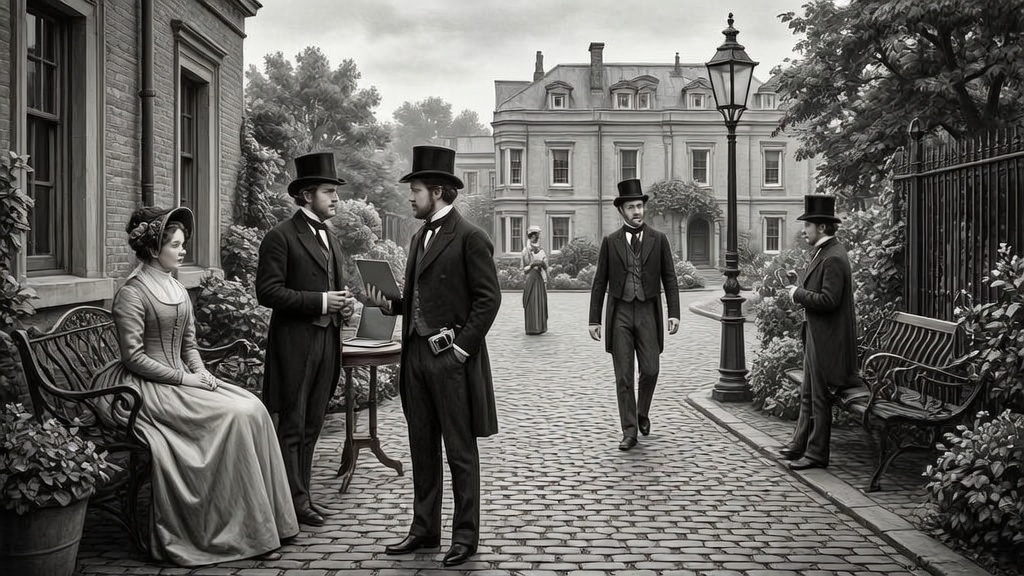
And what did you spot in the image above that didn’t quite fit?

The Word Guardians and The Battle for the Peacekeepers is available on Amazon in eBook and paperback formats. It’s the first of five novels in The Word Guardians series, fantasy adventures in which stories become living magical worlds, and battles are fought within them over the power of imagination, freedom and choice.

Follow us on social media for the latest news and updates…
Why are we drawn to places we’ve never visited?

Have you ever felt drawn to a place you’ve never visited? A country you’ve always wanted to see? A particular period of history, or a city and streets that hold an inexplicable attraction for you? You might spend hours reading about its past, looking at photographs or imagining what it would be like to walk through its streets.

But why that place? What makes that special to us?

In What makes a place special to us, I explored how our memories and imagination can transform a physical location into something deeply personal. In this article I’d like to consider what happens when we’ve never actually been to the place in question.

What makes a place a place in our mind

Our minds gather fragments of places we have encountered through stories, photographs or history, and we begin to build something of our own. We imagine the streets, the buildings, the people who lived there and the lives they might have led. Gradually, the place becomes familiar.

We might feel a sense of attachment to somewhere we’ve only ever experienced through our imagination. I find this particularly fascinating when thinking about historical places.

Take Victorian London, for example. A realm explored in The Word Guardians and the Battle for the Peacekeepers. We can read about its streets, its buildings and the people who inhabited them. We can picture the gas lamps, the crowded thoroughfares and the lives unfolding behind closed doors. We can never experience that London exactly as it was, but our imagination can bring it to life.

Perhaps our fascination is simply the pleasure of imagining another time and place. Or maybe we discover something that resonates with us personally.

What places represent for us

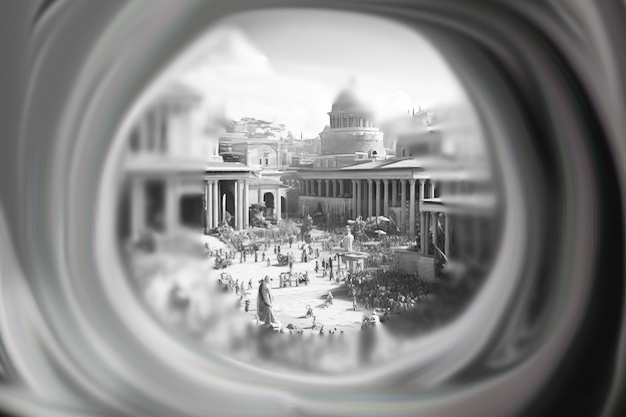
Why might someone be captivated by Ancient Alexandria when other historical cities hold little interest for them? Why might one person feel an extraordinary connection to a particular landscape, while another sees nothing especially remarkable about it?

We might feel a sense of longing for somewhere we’ve never seen. We might find ourselves returning to the same photographs, reading the same historical accounts or dreaming about visiting a place for years, without ever quite understanding why it matters so much to us.

Is it simply curiosity? Or could our attraction be connected to something more personal, something about who we are, what we value or what we feel is missing from our lives?

After all, sometimes we are drawn to places because of what they represent rather than what they are.

A distant coastline might represent freedom. An old city might evoke a longing for a different way of life. A quiet village might represent the sense of belonging we wish we had.

The place becomes a vessel for something within us. And perhaps that is enough to make it special.

A feeling of déjà vu

But what about those moments when a place seems familiar for no obvious reason?

Maybe you’ve looked at a photograph of an unfamiliar street and felt that you’ve seen it before. Or perhaps you’ve arrived somewhere for the first time and experienced a sense of déjà vu.

Perhaps it’s simply the way our minds work. Perhaps it’s the power of imagination, or the unexpected connections our memories can make. But the familiarity could hint at something we cannot remember on a conscious level.

Could some places belong to another life?

What if some of the places we feel drawn to relate to places we have been in another life?

The idea of reincarnation suggests that life might not be limited to a single existence. If that were so, could anything from a previous life could remain with us in some way. Maybe this isn’t a clear memory, but could be a feeling, a fascination or an inexplicable connection.

There is no reliable way to conclude from such experiences alone that we have lived before. A fascination with a historical place isn’t proof of a past life, and feelings of familiarity can have many explanations. But the possibility raises an interesting question and it’s something I explore in The Word Guardians and the Lost Beginnings.

Wrapping up

A place can be more than its physical surroundings. It can hold stories, evoke emotions and mean something different to every person who encounters it. And I believe that this is true for places that we’ve never visited, too.

In The Word Guardians, the magical realms are created by readers in their mind’s eye. They’ve never necessarily visited these places, but they become special through the stories they read.

For the characters of The Word Guardians stories, they visit the places created by the collective imaginations of readers and find special experiences of their own. For Sam, the country mansion realm evokes happy family memories. For Yas, Victorian London piques her interest in history and culture for the period. And while trapped in the Otherworld and made to forget who she was, Mira discovers her past, her Lost Beginnings.

Both readers and the characters find a special relationship with places, as I believe we do too. So, read The Word Guardians and the Battle for the Peacekeepers and experience the realms of the Word Guardians. See what you create in your mind’s eye and how the places the characters visit are special to you.

Follow us on social media for the latest news and updates…