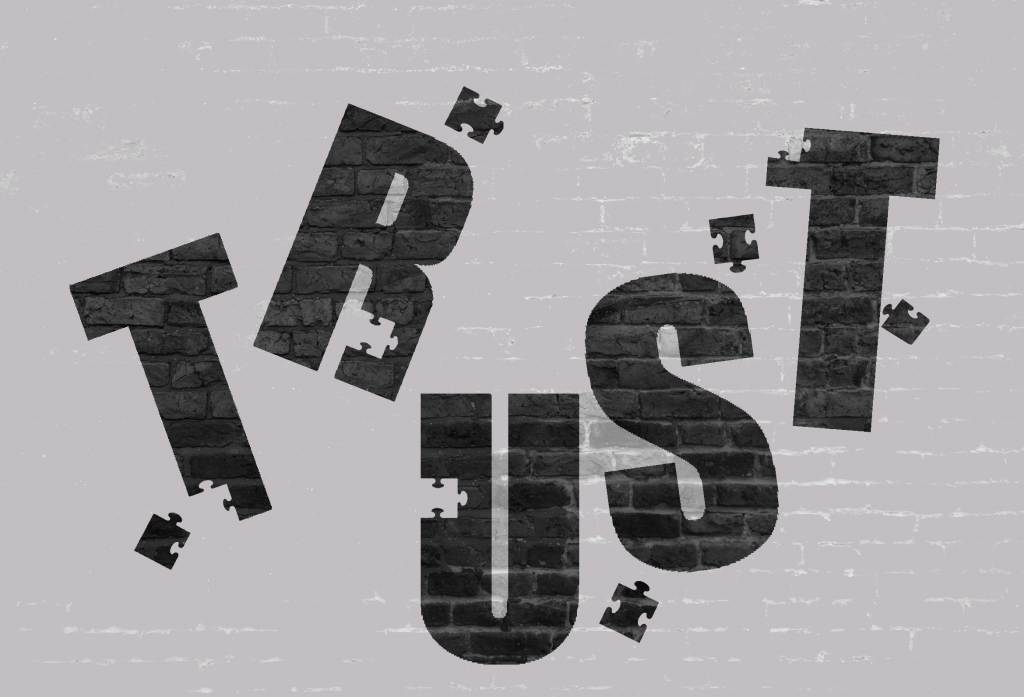
Welcome to this week’s blog. I thought, this time I’d raise the question of what trust is and why it is important.
How do we trust someone else? What impact does it have on us when we do or do not have it?
And by way of example, I thought I’d share an excerpt from Book 2 The Twisting Tales…
Detective Wheeler and Raelinn in The Void
“What are you doing?” shouted Raelinn from the end of the carriage. She started to make her way down and was incensed. “Just let me go!”
“No!” he said, exhausted. “We’re just going in circles, repeating the same story!”
“You’re lying!”
The train was accelerating out of the station. The lights of the station moved behind them and it was pitch black outside. The windows reflected the interior of the carriage.
“Why would I?” retorted Wheeler. “Don’t you see? It’s the Void?”
‘The Void,’ Raelinn thought in her mind. That rang a bell. A distant memory of a battle. Then it faded and she saw the face of the man that had tricked her and brought her here. He needed to pay.
“Orfeo told me to keep an eye on you!” she seethed. “For Index! He said you were not to be trusted!”
“So, why don’t you hit me some more then. Fly at me in rage, like you usually do about now!”
Raelinn flew down the carriageway, arms extended, with her fangs bared. Wheeler knew what to do. He dropped down, catching her and rolling her over his head. He got back on his feet quickly.
“You said I was important,” Wheeler said, watching Raelinn and playing along with what he remembered having happened before, to see if it jogged her memory.
“Yes,” she replied, hissing. Then she stopped for the merest of moments and looked confused. “This?” she asked. “I remember something.”
“Yes,” Wheeler replied. “It’s taken you a while, but what do I know? As you said at the Battle for the Peacekeepers, I’m just a simpleton!”
His words seemed to jog a memory for Raelinn. She observed him for a moment.
“You’re messing with my head!” Raelinn shouted. She moved towards him firing word arrows.
Wheeler sighed and created a shield, deflecting the word arrows. They penetrated the walls of the carriage and it started to unknit.”
What happens when we don’t trust someone
The excerpt shows that when trust is missing in a relationship, pretty much everything that’s said or done is questioned. Why is the other person saying or doing that? What are they hoping to achieve? Does it also benefit me and others?
It also underpins what we take as read or not from other sources in our lives, and I touched on this in In Life, who decides what’s the right news?
In stressful moments if the trust is not there it can lead to disaster, as Raelinn and Wheeler found out. They are literally at each other’s throats, and it takes effort for Wheeler to convince Raelinn that they need to work together to escape The Void.
The flipside. How trust forms
Conversely, when we do trust someone, we are much happier to take what is said and done as read. We know from experience that the person will speak and act in line with a particular pattern of behaviour and over time we come to rely on that behaviour.
The Mirriam Webster dictionary definition of trust includes the phrase ‘reliance on the character, ability, strength, or truth of someone or something’. It also mentions ‘one in which confidence is placed’, so trust is an ability to rely on someone else to make decisions and take actions in line with a particular direction.
Turning it over to you
I’m conscious I’m no expert in this topic, but I wanted to prompt the questions as I think trust and how we build it is a valuable concept to reflect on. So, for you, what does trust mean and what does someone else have to show to earn yours?
And while you’re thinking about that, if you want to learn more about what happens to Raelinn and Wheeler’s opposition in The Void, buy and read Book 2 The Twisting Tales (you’ll have to read book 1 first to set the scene 😊). Both are available in paperback and kindle editions.
Happy reading.
Follow us on social media for the latest news and updates…